At some point, no has to mean no.

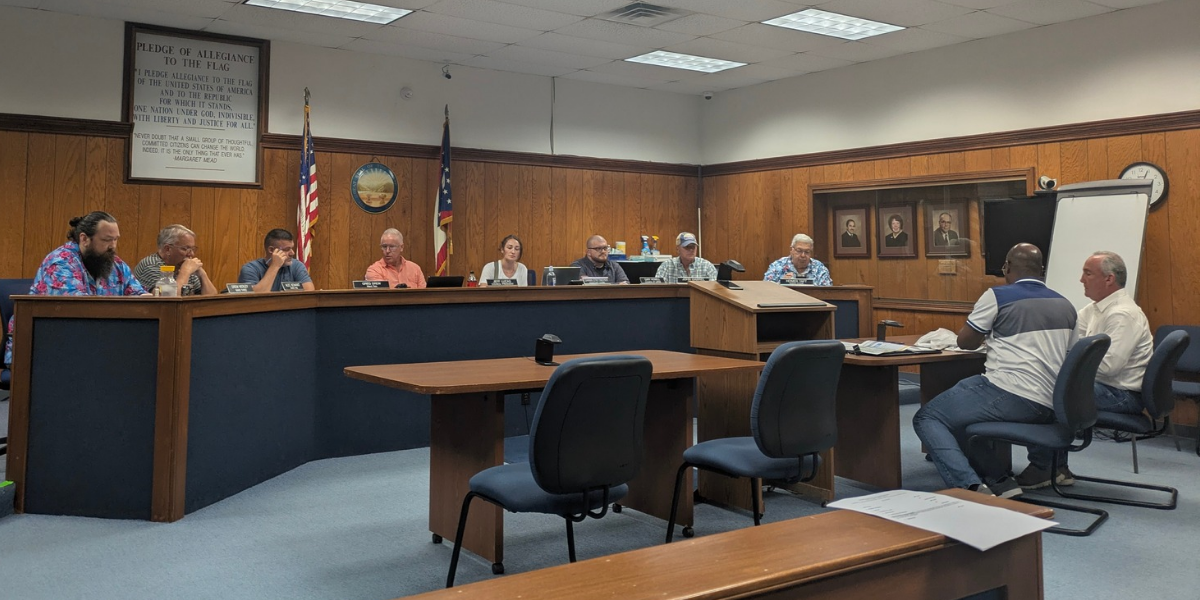
I left Friday’s special Vermilion City Council meeting deeply disappointed. It was not simply because of a disagreement over Lorain County’s proposed Urban County program. It was because I watched a public process that seemed less concerned with hearing opposition than overcoming it.
There is a difference between reconsidering an issue when meaningful new information emerges and continuing to push until officials receive the answer they want.
The resolution first appeared before council Aug. 3. It would authorize Vermilion to participate in Lorain County’s proposed Urban County Community Development Block Grant program and allow the mayor to execute a cooperation agreement with the U.S. Department of Housing and Urban Development.
County officials said the program could provide additional opportunities for infrastructure, housing and community-development funding. However, Vermilion was not guaranteed a specific amount of money or approval of any particular project.
Council members also raised unresolved questions about assistance currently available through Erie County, how projects would be selected and whether Vermilion would have meaningful influence over those decisions.
Lorain County officials acknowledged that they learned July 9 that the county had another potential path toward receiving the Urban County designation. Council members said important information was not provided to them until shortly before the Aug. 3 meeting.
Despite the late notice and unanswered questions, council was asked to waive its normal three-reading process because the county faced an Aug. 10 deadline.
The resulting vote was 5-1 against suspending the rules, with one member abstaining. Council President Jeff Lucas cast the only vote in favor.
Legally, that was a procedural vote. It was not a final vote rejecting the resolution itself. Because council did not waive the three-reading requirement, the resolution remained alive after its first reading.
I was truly confused when I received the email of a special council meeting scheduled for Friday, Aug. 7 at 5pm. Council members, almost to a man had said that they would come in for a special meeting during the Aug. 3 Monday council session.
Council spent the greater part of 20 minutes discussing a potential special meeting. They decided to vote instead and I believe that council members left that meeting believing the matter was closed.
That distinction matters, and Lucas was within his rights to recognize it. I am not criticizing him for understanding the procedure or for using the authority of his office.
However, that was not how the vote was understood by many people in the room.
The discussion made it clear that the five council members voting no were not merely defending the three-reading process. They opposed the proposal itself. Lucas supported it, and one member abstained.
Those five members appeared to believe they had voted against the proposal and were finished with it. People in the audience believed the same thing.
The vote may have been procedural on paper, but its political meaning was unmistakable. Five members did not want the proposal. One did.
The procedural distinction gave Lucas a path to keep the resolution alive. A special meeting was scheduled for Aug. 7 with the resolution as its only substantive agenda item. The meeting lasted approximately 1 hour and 40 minutes as county officials exhaustively pressed for the result they wanted.
That is where the process became deeply troubling to me.
If council members and the public leave a meeting believing a proposal has been defeated, only to learn that one missed procedural step allowed it to continue, something has gone wrong. At minimum, everyone should have been told clearly before the first meeting ended that the resolution remained active and would return.
Instead, what appeared to be a decisive rejection became another opportunity to pursue approval.
What I witnessed did not feel like opposition being respected. It felt like opposition being managed. Almost two hours later, I was wondering if paint drying would happen quicker than the realization that this resolution wasn’t going to pass.
A government should not hear “no” and automatically translate it into “not yet.” It should not treat resistance from residents or elected representatives as merely another procedural obstacle along the path toward approval.
This is especially troubling because Vermilion has seen the power of procedure overwhelm before.
In 2024, members of Concerned Vermilion Citizens sought to place a referendum on the ballot challenging council’s decision to rezone approximately 300 acres.
The group collected enough valid signatures to qualify for the November ballot. Those residents did the difficult work people are constantly told they should do. They organized, gathered signatures and attempted to place the decision before voters.
The public never received that vote.
The referendum was removed from the ballot because the certified copy filed before the petitions were circulated was missing two pages from the ordinance’s attachments.
The group maintained that then-Clerk of Council Gwen Fisher had provided incomplete copies. Fisher disputed that account. The citizens attempted to reconstruct the missing material, but the document they ultimately filed remained incomplete.
The Lorain County Board of Elections sustained a protest against the referendum, and the Ohio Supreme Court upheld the decision because state law required strict compliance.
The court did not find that Fisher intentionally misled or sabotaged the group. One elections board member suggested that pages may have been omitted inadvertently. The court also determined that the petitioners knew pages were missing and remained responsible for filing a complete copy.
Those legal distinctions must be reported honestly. But the practical outcome cannot be ignored: Residents collected enough signatures to qualify for the ballot, yet the people of Vermilion were denied the opportunity to vote because of missing pages.
That is why Friday’s meeting cannot be viewed in isolation.
Across rural and suburban communities, residents are repeatedly being asked to surrender some measure of local control in exchange for promised money, development, convenience or security.
The proposals are different. A regional grant program is not the same as a data center, and neither is the same as a network of automated license plate readers. They should not be presented as one coordinated conspiracy.
However, each raises similar questions.
Who makes the final decision? Who receives the greatest benefit? Who bears the long-term costs and risks? What control does the community surrender? Can the decision be reversed later? What happens when residents say no?
There is a growing tension between larger government bodies, corporations and regional institutions seeking access to local land, water, electricity, information or authority and the smaller communities expected to accept the consequences.
Officials often respond that the meeting was legal, the procedure was permitted or the deadline was real. Those facts matter, but legality is the minimum standard for government. It is not proof that a process was transparent, responsive or respectful.
Opposition cannot become theater. No means No.
Residents should not be invited to speak only to discover that their opposition will be processed, managed and outlasted. Gathering signatures, attending meetings, contacting representatives and speaking publicly must carry more weight than a ceremonial acknowledgment before officials continue pursuing the same result.
If genuinely new information justifies reconsidering a decision, officials should identify that information clearly. If council members change their positions, they should explain exactly what changed their minds. If officials decide to proceed despite substantial public opposition, they should say so openly and accept responsibility for that choice.
What government should not do is treat every no as evidence that it has not pushed hard enough.
There are no additional yeses hidden inside a no. There is only a community asking whether its voice still carries any weight.
Oh, for the record, the resolution to pass by emergency failed 4-3. So technically, the matter could come to a third reading at another special council meeting before before the deadline. The deadline for Lorain County to file is Aug. 10. There is technically enough time for another special meeting and another round of nays. I sincerely hope the first two resounding no answers were enough to close the matter.
Politics is a greasy business. I’ll hold my breath.