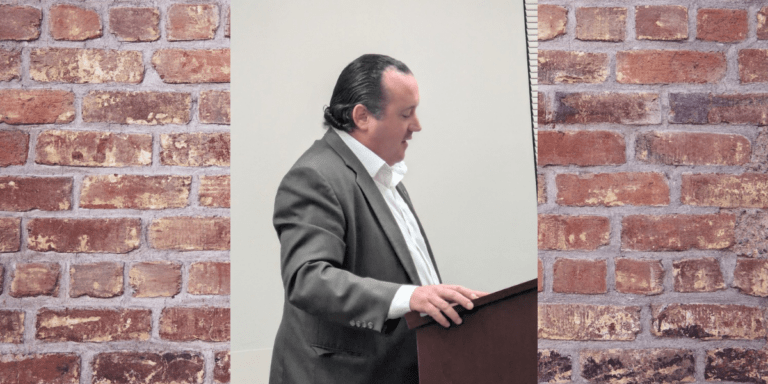
VERMILION — State Representatives Kellie Deeter (R-District 54) and D.J. Swearingen (R-District 89) met with residents Aug. 12 at the Goodwill Opportunity Center on Liberty Avenue to outline recent legislative efforts tied to property taxes and school funding.
The two lawmakers, who represent Lorain and Erie counties, walked through a series of budget provisions, some passed by the General Assembly but vetoed by Gov. Mike DeWine.
One vetoed measure, House Bill 129, would have counted all levies toward the state’s 20-mill floor. That change could have lowered some homeowners’ property tax bills but slowed revenue growth for schools. Another veto targeted a plan to cap district cash carryovers at 40 percent of general fund spending. Lawmakers said Ohio’s 611 districts are carrying a combined $10.5 billion in reserves.
Other vetoed provisions included new powers for county budget commissions: auditors, treasurers, and prosecutors, to weigh in on levy rates and local cash carryovers, as well as a requirement that officials sign off before accepting unvoted tax increases. Lawmakers also attempted to simplify levy ballot language so voters could more easily understand tax impacts. That provision was vetoed, though the House has overridden and the Senate could still take it up this fall.
Among measures that did take effect: counties may now double the state homestead exemption from $28,000 to $56,000 for eligible residents, though the added cost falls to local governments. A reform of the Board of Revision process also passed, limiting schools’ ability to challenge property tax values.
A separate bill under consideration would eliminate “inside millage,” removing up to 10 mills of unvoted property tax and shifting decisions directly to voters. Supporters argue the change would diversify Ohio’s tax base through options like sales or income taxes, while opponents warn it could lead to higher property taxes unless replacement revenue is secured.
Lawmakers also previewed several newly introduced proposals: phasing out continuous levies by 2030, allowing referendum petitions to reduce inside millage, and requiring supermajority thresholds of 60 or 66 percent for future levy approvals depending on the millage sought.
Both legislators urged residents to stay involved in local decision-making. “This is your money,” Swearingen said. “It’s up to all of us to make sure it’s spent responsibly.”
The forum, hosted by Concerned Vermilion Citizens, drew a roomful of residents interested in the ongoing debate over property tax reform.
Vermilion Daily thanks Sarah Scarvelli for attending the meeting and recording it so we could bring you this report.
About the Author