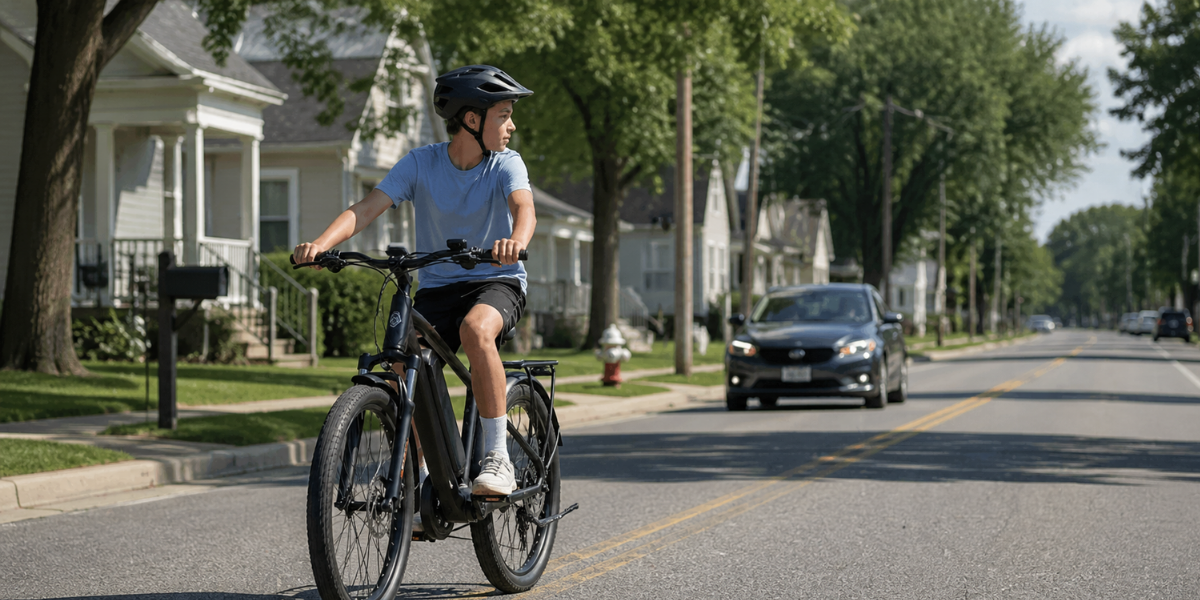
VERMILION — E-bikes, scooters and other electric rides are becoming more common on local streets, and police departments across Ohio are reminding families to know the difference before someone gets hurt.

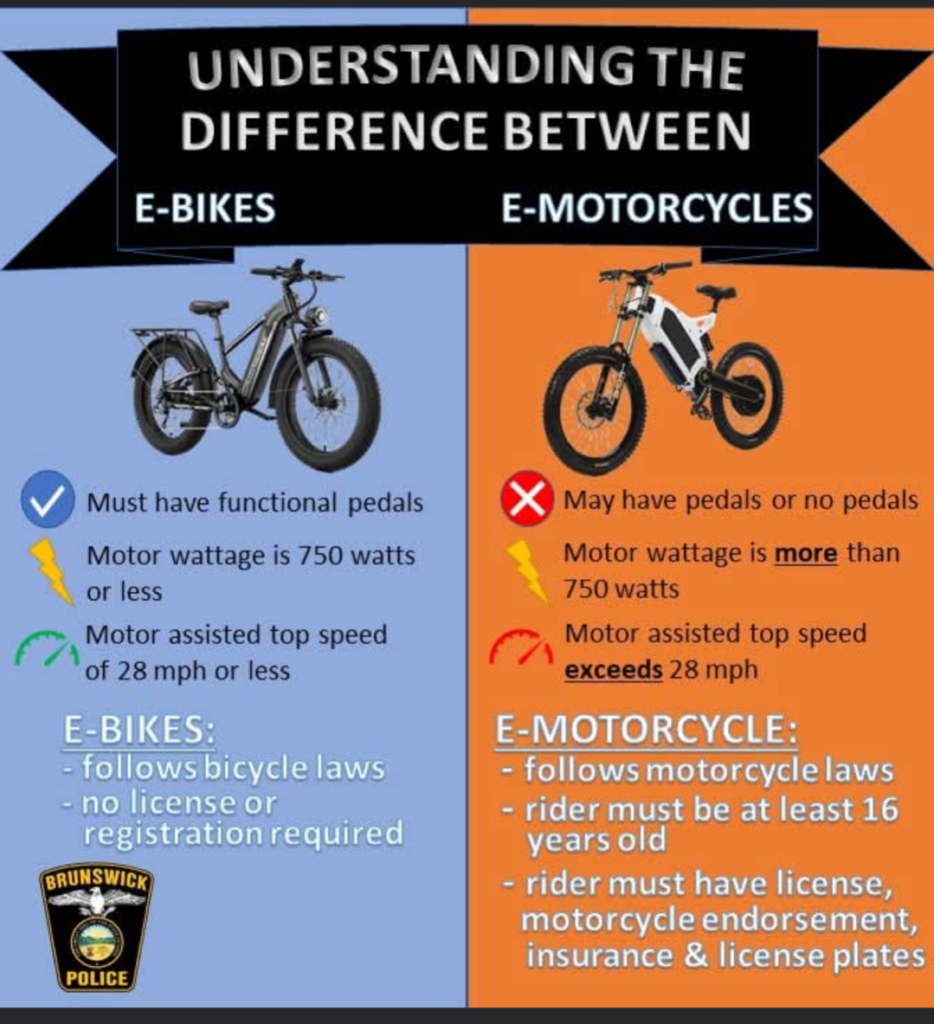
The issue is not just what a vehicle looks like. Some electric bikes sold online may look like bicycles, and some may even have pedals, but that does not always mean they qualify as legal e-bikes under Ohio law.
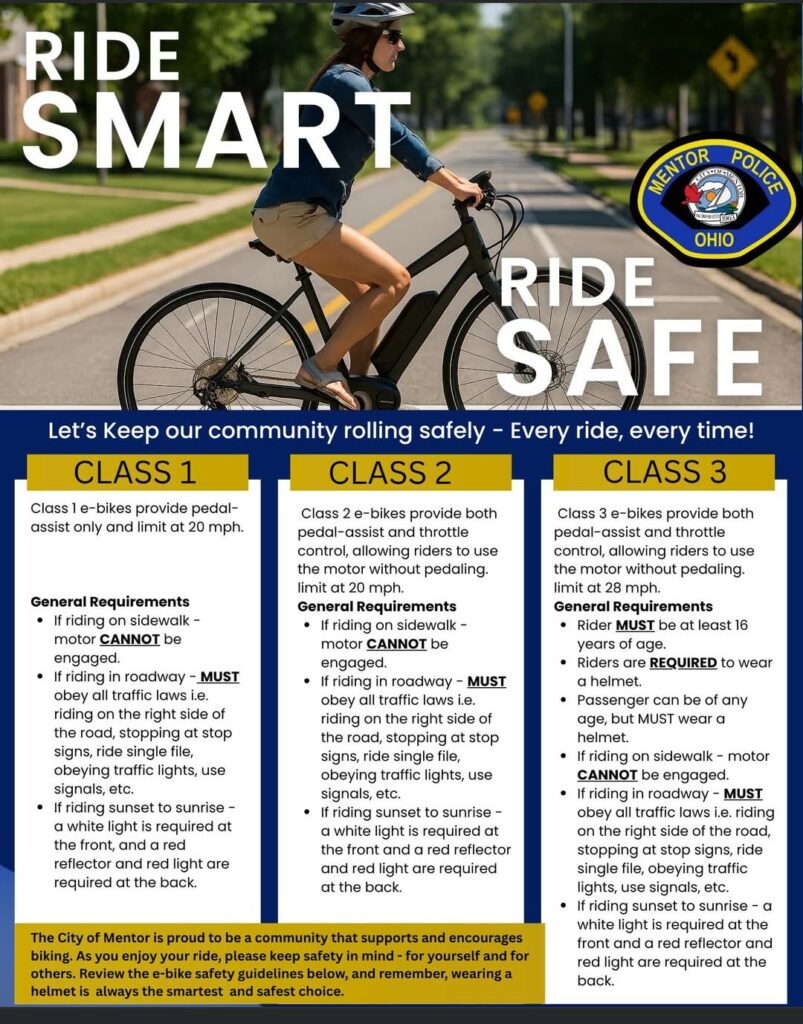
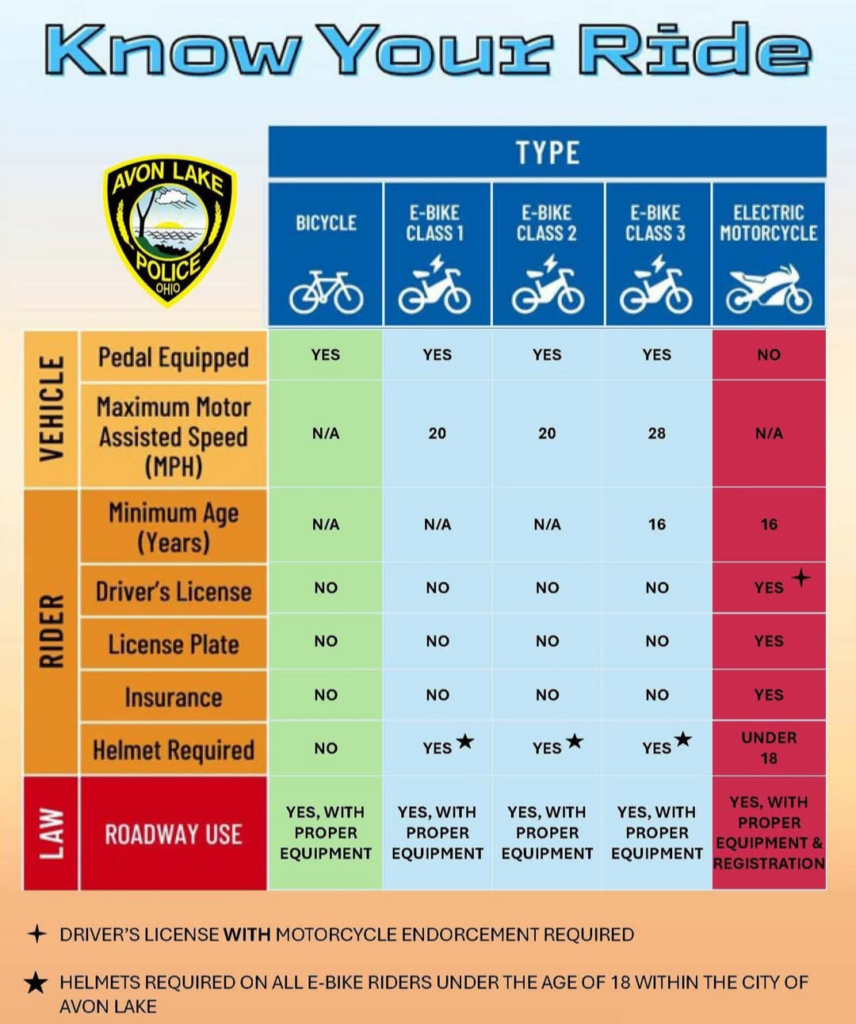
In Ohio, a legal e-bike must have working pedals, an electric motor under 750 watts and fit into one of three classes. Class 1 and Class 2 e-bikes provide motor assistance up to 20 mph. Class 3 e-bikes provide assistance up to 28 mph and come with additional rules.
Faster or more powerful electric vehicles may fall outside the e-bike category. That can change where they may be ridden, who may ride them and whether a license, registration, insurance or additional equipment is required.
Know Before They Ride
For parents, the safest starting point is simple: check the label before buying or allowing a child to ride.
Ohio requires e-bikes to have a label showing the class, top assisted speed and motor wattage. If the vehicle has no working pedals, a motor of 750 watts or more, or motor-assisted speeds above 28 mph, it may not be a legal e-bike.
Class 3 e-bikes also have stricter rules. No one under 16 may operate a Class 3 e-bike, and riders and passengers on Class 3 e-bikes must wear approved helmets.
Sidewalks, Streets and Shared Spaces
Sidewalk rules are one area where families can easily get confused.
In Vermilion, bicycles may be ridden on sidewalks where not otherwise posted, but riders must yield to pedestrians, give an audible warning before passing and walk the bicycle if the sidewalk is crowded. Riders must also dismount before crossing streets or intersections.
E-bikes have an added restriction. Under Ohio law, an e-bike may be on a sidewalk only when the motor is not engaged. In plain terms, an e-bike on a sidewalk must be used like a regular bicycle, not powered by the motor.
That distinction matters, especially for children riding near pedestrians, driveways, intersections and parked cars.
Helmets, Lights and Reflective Gear
Even when a helmet is not legally required, it is one of the simplest ways to reduce the risk of serious injury.
Ohio requires helmets for Class 3 e-bike operators and passengers, but helmets are a smart choice for every rider, especially children and teens. A helmet should sit level on the head, cover the forehead and fasten snugly under the chin.
Visibility matters, too. Ohio law requires bicycles used from sunset to sunrise to have a white front light, a red rear reflector and a red rear light. A rear red light may also serve as the reflector if it meets the visibility requirement.
Reflective gear can add another layer of protection. Bright clothing, reflective tape, reflective backpacks, ankle bands, wheel reflectors and flashing lights can help drivers see riders sooner, especially near dusk, at night or in rainy weather.
Drivers Have a Role, Too
Bike and e-bike safety is not only a rider issue. Drivers should expect to see more children, teens and families on bicycles, scooters and e-bikes as warmer weather arrives.
That also means there is less room for distracted driving. E-bikes can move faster than many drivers expect, and riders may appear suddenly near driveways, intersections, crosswalks, parked cars or neighborhood streets.
Being on a phone while driving is not an option. A glance away from the road can be enough time for a child, bicyclist or e-bike rider to enter a driver’s path.
Drivers can help by slowing down in neighborhoods, putting phones away, checking twice before turning, watching driveways and intersections, giving riders space and staying alert near parks, schools and crosswalks.
No safety rule can prevent every crash. But knowing what kind of vehicle a child is riding, making sure the rider is visible and keeping drivers focused on the road can reduce the risk.
Before a child rides, parents should check four things: the helmet fits, the lights work, the rider can be seen and the vehicle is appropriate for the child’s age and ability.